The Resurgence of Print Catalogs in a Digital First World: A Firestone Park Perspective

If you run a business in Firestone Park or the greater Orange County area, you have likely noticed a shift. While digital marketing still dominates ad budgets, print catalogs are making a serious comeback. Customers are tired of infinite scrolling; they want something tangible they can hold, flip through, and share with a spouse or colleague. This article explains why that resurgence is happening, who benefits most from it, and exactly how to produce a catalog that drives sales rather than ending up in the recycling bin.
Why Physical Catalogs Are Winning Again
The narrative that print is dead was always overstated. What died was the generic, mass-mailed catalog that offered no value. What is thriving is the curated, high-quality catalog that feels more like a magazine than a sales pitch. In a digital world where attention spans are measured in milliseconds, a physical object forces a different kind of engagement. It sits on the coffee table. It gets dog-eared. It gets passed along.
Neurologically, physical media creates a stronger emotional connection. The tactile sensation of paper, the weight of the book, and the visual quality of a high-resolution image trigger a different response than a screen. For businesses in Firestone Park, this means a catalog is not just a list of products; it is a brand experience. It builds trust in a way that a pop-up ad cannot.
The Psychology Behind the Tactile Experience
There is a reason why people still buy hardcover books and vinyl records. The physical object has intrinsic value. When a customer receives a catalog, they are forced to slow down. They are not multitasking. They are not clicking away. This focused attention is the most valuable currency in marketing today.
This is particularly effective for high-consideration purchases. If you are selling furniture, custom cabinetry, or high-end appliances in the Firestone Park area, a catalog allows the customer to compare options side-by-side without the distraction of browser tabs. It allows them to visualize the product in their own space, at their own pace.
Digital Fatigue Is Real
We are seeing a measurable backlash against the constant bombardment of digital ads. Consumers are using ad blockers, skipping pre-roll videos, and ignoring sponsored posts. Print catalogs offer a respite from this noise. They are a permission-based form of marketing; when someone picks up your catalog, they are actively choosing to engage with your brand.
Who Benefits Most from a Catalog Strategy
Not every business needs a 100-page catalog. But many do. The key is understanding your sales cycle and your customer’s buying habits. If your product requires explanation, customization, or visual comparison, a catalog is a powerful tool.
- B2B Suppliers: If you sell components, tools, or wholesale goods, a catalog is an essential reference tool for your buyers. They keep it on the shelf and call you when they need to reorder.
- Home and Garden: Landscaping companies, furniture stores, and interior designers in Orange County use catalogs to showcase materials and finished projects. This is a visual medium, and print does it best.
- Food and Beverage: Specialty food retailers and caterers use catalogs to showcase menus and gift baskets. The photography sells the product.
- Fashion and Apparel: Boutiques use smaller catalogs or lookbooks to tell a seasonal story. It drives traffic both to the physical store and the e-commerce site.
- Manufacturers: Technical specifications and detailed diagrams are easier to read in print than on a screen. A well-produced spec sheet or parts catalog reduces customer service calls.
Print vs. Digital: A Direct Comparison
To understand the resurgence, it helps to look at the strengths and weaknesses of each medium. The goal is not to replace digital, but to integrate it. A catalog should drive traffic to your website, and your website should reinforce the credibility established by the print piece.
| Factor | Print Catalog | Digital Catalog/Website |
|---|---|---|
| Attention Span | High (average 15–20 minutes of interaction) | Low (average 2–3 minutes per session) |
| Trust Factor | High (perceived as more legitimate) | Medium (concerns about data privacy) |
| Haptic Engagement | Strong (physical interaction with pages) | None (screen-based interaction) |
| Shareability | Passive (passed to a colleague or family member) | Active (requires a click to share) |
| Update Speed | Slow (requires reprint) | Instant (edit and publish immediately) |
| Cost per Unit | Higher (paper, ink, postage) | Lower (server space and bandwidth) |
| Tracking | Harder (use unique promo codes or QR codes) | Easier (analytics and pixel tracking) |
| Shelf Life | Long (weeks or months on a desk) | Short (lost in a browser history) |
The table above shows a clear pattern. Print wins on engagement and trust; digital wins on speed and cost. The best strategy uses both. You print a catalog to build the relationship, and you use digital channels to capture the order and provide real-time inventory updates.
How to Plan a Catalog for Firestone Park Businesses
Producing a catalog is a project, not a single task. You need to manage inventory data, photography, copywriting, design, printing, and distribution. Here is a practical workflow that works for most businesses in the Irvine and Firestone Park area.
1. Define the Purpose and Audience
Are you sending this to existing customers to increase order size, or are you prospecting for new business? The content and tone will differ. A customer retention catalog can assume prior knowledge. A prospecting catalog needs to introduce your brand value proposition clearly and quickly. Write down your goal: is it to generate phone calls, website visits, or in-store foot traffic?
2. Audit Your Product Data
This is the most tedious part, but it is critical. Go through every SKU you plan to include. Check the product descriptions, part numbers, and pricing. Inaccurate information in a printed catalog is worse than no catalog at all. It destroys credibility and creates customer service headaches. Since you cannot edit a printed page, the data must be correct before you go to press.
3. Invest in Professional Photography
The images are the catalog. If the photography is poor, the product looks cheap. If the photography is excellent, the product looks premium. You do not necessarily need a full studio shoot, but you do need consistent lighting and backgrounds. A consistent visual style across all pages is what separates a professional catalog from a photocopied price list.
4. Write Copy That Sells, Not Describes
Avoid writing “This is a blue widget.” Instead, write “This durable widget is engineered for high-volume use and fits all standard mounts.” Focus on the benefit to the customer. Use bullet points for specifications, but use prose for the story. Keep paragraphs short. Your copy should guide the reader through the page, highlighting the features that matter most.
5. Design for Readability
White space is your friend. Do not cram every square inch with products. A cluttered page is overwhelming and cheapens the brand. Use a clear hierarchy: brand name, product name, price, and description. Ensure the font size is legible for your target demographic. If you are selling to older business owners, a 9-point font is too small.
Production and Printing Methods That Matter
Once the design is finalized, you need to choose a printing method. The volume and the quality requirements will dictate the process. For a commercial catalog, you generally have two primary options.
Offset Printing for High Volume
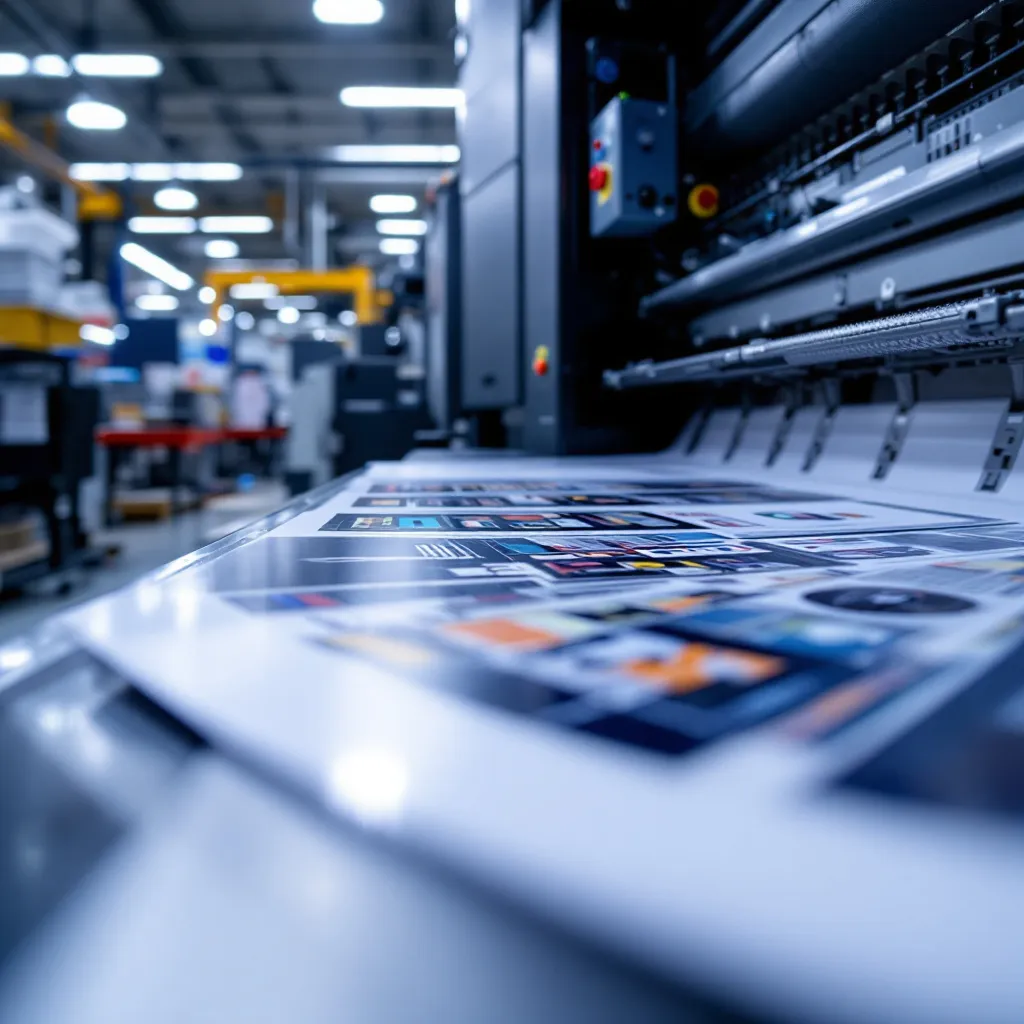
Offset printing is the traditional method. It offers the highest quality and the lowest cost per unit at high volumes. If you are printing 5,000 copies or more, offset is usually the right choice. The colors are consistent, and you can print on a wide variety of paper stocks. The setup cost is higher, but the marginal cost of each additional copy drops significantly.
Digital Printing for Short Runs
Digital printing is ideal for smaller quantities, typically under 1,000 copies. It allows for quick turnaround times and even variable data printing. This means you can personalize each catalog with the recipient’s name or a unique offer code. This is a powerful tool for direct mail campaigns. If you are testing a new market or need catalogs for a specific trade show, digital printing is the pragmatic choice.
If you are unsure which method fits your budget and timeline, a professional printing partner can guide you. A full-service shop like Avanti Printing Inc can review your file and recommend the most cost-effective production path based on your specific quantity and paper selection.
Paper Stock and Finishing: The Subtle Salespeople
Do not underestimate the power of paper. The weight, texture, and finish of the paper communicate a message before the customer reads a single word.
- Glossy Coating: Makes colors pop and images look vibrant. Best for photography-heavy catalogs like fashion or food.
- Matte Coating: Reduces glare and feels more sophisticated and understated. Best for B2B catalogs and technical manuals.
- Uncoated Paper: Feels organic and natural. Best for eco-friendly brands or artisanal products. It absorbs ink, so colors will be less vivid.
- Heavyweight Cover: A thick cover (think 100lb or more) makes the catalog feel substantial. It protects the pages inside and conveys durability.
Finishing options also matter. A matte lamination on the cover protects it from scuffs and fingerprints. Rounded corners can give it a premium, modern look. A saddle-stitch binding (staples) is fine for catalogs under 48 pages. For larger catalogs, you will need perfect binding, which uses glue to hold the pages to the spine.
Distribution: Getting the Catalog into the Right Hands
Printing the catalog is only half the battle. You need a distribution strategy. A beautiful catalog that sits in a warehouse generates zero revenue.
Direct Mail Targeting
For Firestone Park businesses, targeted direct mail is still one of the highest-ROI marketing channels. You can buy mailing lists based on geography, income level, or even specific job titles. The United States Postal Service offers Every Door Direct Mail (EDDM) for specific carrier routes, which is cost-effective for local businesses targeting specific neighborhoods in Orange County.
In-Store and Point of Sale
Place catalogs at your checkout counter, in your waiting room, or in a display rack near the entrance. Encourage customers to take one home. You can also leave catalogs at complementary businesses. For example, a custom furniture maker could leave catalogs at a high-end real estate office.
Trade Shows and Events
Trade shows are where catalogs shine. A prospect who visits your booth is already interested. Handing them a catalog gives them a reason to remember you after the event ends. It is a physical reminder of the conversation you had. Make sure you have enough inventory for the entire show, and consider a lighter, smaller version that is easier for attendees to carry.
Measuring the ROI of Your Print Catalog
You cannot manage what you do not measure. While print lacks the instant analytics of digital, you can still track performance effectively. The key is to make the response trackable.
- Unique Promo Codes: Print a specific code on the back cover, such as “CATALOG10” for 10% off. Use a different code for your email list and your social media channels. This tells you exactly which channel generated the sale.
- Dedicated Landing Pages: Create a specific URL that is only printed in the catalog, like yourwebsite.com/catalog. This page should be tailored to the catalog audience and make it easy to order.
- QR Codes: Place QR codes next to featured products that link directly to the product page on your website. This bridges the gap between print and digital and reduces friction for the customer.
- Call Tracking: Use a unique phone number in the catalog. This is especially important for B2B businesses where the sale happens over the phone rather than online.
Once the campaign is live, track the data weekly. Compare the response rate to your cost per catalog. If you mail 5,000 catalogs at a total cost of $4,000 (printing plus postage), and you generate $20,000 in sales from the unique codes, that is a 5x return. That is a solid ROI for any marketing channel.
Common Mistakes to Avoid When Producing a Catalog
Having produced thousands of print pieces over the years, I see the same errors repeated. Avoid these pitfalls to save time and money.
- Skipping the Proofread: Typos and incorrect prices are fatal. Have at least two people proofread the final PDF. Read it backward if you have to, to catch spelling errors.
- Ignoring Color Calibration: The colors on your computer monitor will not match the printed output unless your files are calibrated. Always request a physical proof before the full press run. It is worth the cost.
- Overloading the Design: Too many fonts, too many colors, and too much text make the catalog look amateurish. Stick to a simple grid and a consistent color palette.
- Forgetting the Call to Action: Every spread should tell the customer what to do next. Is it “Call to order,” “Visit our showroom,” or “Shop online”? Do not leave them guessing.
- Using Low-Resolution Images: An image that looks fine on a website will look pixelated in print. All images must be at least 300 DPI (dots per inch) at the final printed size.
Frequently Asked Questions About Print Catalogs
Here are the three questions I get asked most often by business owners in the Firestone Park area who are considering a catalog project.
How many pages should my catalog be?
There is no magic number, but you should aim for multiples of four (because of how printing presses fold paper). A 16-page catalog is a good starting point for a small business. It is substantial enough to look professional, but not so large that it becomes expensive to produce or overwhelming to design. Focus on your best-selling products first.
How much does a professional catalog cost to print?
Pricing varies wildly based on page count, paper quality, and quantity. As a rough estimate, a 24-page catalog with a standard paper stock and perfect binding might cost between $2.50 and $5.00 per unit for a run of 1,000 copies. The per-unit cost drops significantly as you print more. The design and photography costs are separate and depend on the complexity of the project.
Is a catalog worth it for a small local business?
Yes, if you have a product line that benefits from visual presentation. If you are a local service provider like a plumber or an electrician, a catalog is likely overkill. But if you are a boutique retailer, a specialty food producer, or a B2B supplier, a small catalog or lookbook can differentiate you from competitors who rely solely on social media posts. It positions you as an established, credible business.
The resurgence of print catalogs is not a nostalgia trip. It is a strategic response to a saturated digital environment. For businesses in Firestone Park, a well-executed catalog offers a tangible way to build trust, showcase quality, and drive measurable sales. When you pair the credibility of print with the convenience of digital ordering, you create a marketing asset that works harder than either channel could alone.
Visit Avanti Printing Inc









Post Comment