Digital vs Print Marketing for Small Business
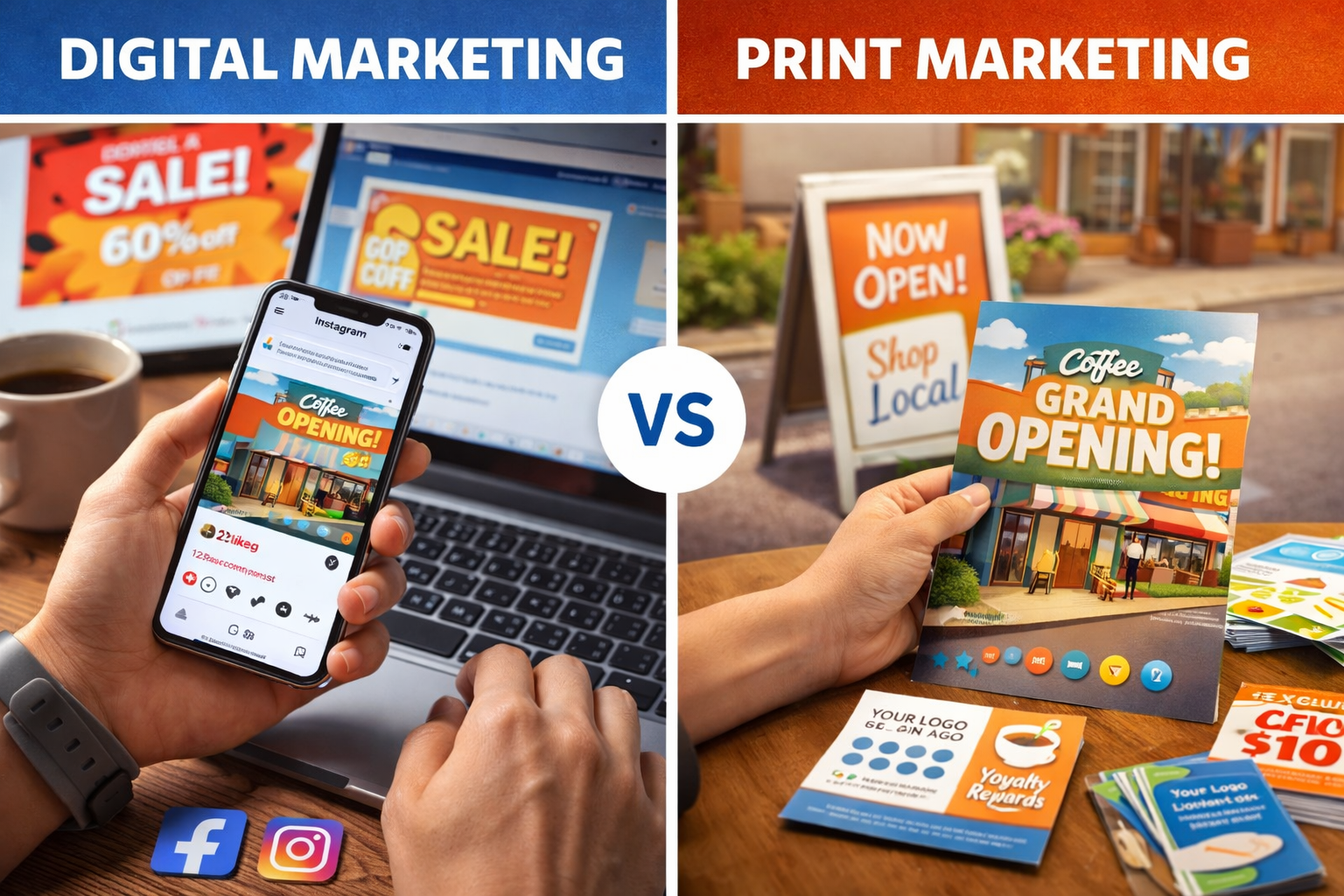
Digital vs Print Marketing for Small Business: What Really Works in 2024?
What’s the first thing that pops into your mind when you hear “marketing”? Is it a sleek Instagram ad that stopped your scroll, or maybe a glossy postcard tucked into your mailbox? For most small business owners, the digital vs print marketing debate is a constant tug-of-war. You want greater reach and brand recognition, but also need something authentic and trustworthy that builds customer trust—all without blowing your budget.
I’ve spent over a decade helping small businesses navigate these choices, and let me tell you: there’s no one-size-fits-all answer. Each marketing strategy—whether it’s digital or print—has its quirks, perks, and pitfalls. In this guide, I’ll break down how each method stacks up for small businesses in the real world. We’ll dive into costs, reach, reporting, and—most important—how to actually connect with your target demographic. By the end, you’ll know exactly how to play to your strengths, whether you’re all-in on online advertisements or still believe in the power of paper.
Here’s what we’ll cover:
- How digital marketing delivers massive reach (but with caveats)
- Why print marketing still grabs attention and trust
- Real numbers on costs, ROI, and tracking
- How to build brand recognition that sticks
- Insider tips for combining both methods for maximum impact
Ready? Let’s get your business noticed.
1. Digital Marketing: Greater Reach, But Is It Always Better?
Here’s the thing: digital marketing can put your business in front of more eyeballs than any other method. With over 311 million internet users in the USA alone, the potential audience is staggering. Platforms like Facebook, Instagram, Google, and TikTok let you target specific age groups, interests, and even zip codes in seconds.
What Does “Greater Reach” Actually Mean?
Reach isn’t just about numbers. It’s about getting in front of the right people. Digital platforms give you tools to zero in on your ideal customer. So, instead of shouting into the void, you’re whispering directly to the folks who care.
- Geo-targeting: Show ads only to people near your store.
- Interest targeting: Focus on users already into your industry.
- Retargeting: Remind people who visited your website to come back.
But don’t get blinded by big numbers. A post reaching 10,000 people means nothing if nobody clicks or buys. That’s why I always recommend tracking not just reach, but real engagement.
2. The Viral Effect: Can Small Businesses Really “Go Viral”?
You’ve heard the stories—one clever tweet or TikTok video and suddenly a business can’t keep up with orders. But can any small business go viral with the right digital marketing strategy?
What Going Viral Really Takes
Going viral isn’t just luck. It’s a mix of timing, creativity, and knowing your audience. Most viral hits are:
- Emotionally compelling (funny, heartwarming, shocking)
- Shareable and easy to understand at a glance
- Paired with strong visuals or video
But, here’s the honest truth: virality is rare. Most small businesses see steady, manageable growth—not explosive overnight fame.
That’s not a bad thing. Instead of betting the farm on going viral, focus on creating content that’s helpful, authentic, and consistently on-brand. Over time, that builds brand recognition and customer trust—which is way more valuable than a fleeting spike in likes.
3. Print Marketing: Grabbing Attention in a Digital World
Let’s not count out print marketing. Despite what some “experts” say, print is far from dead—especially for small businesses with a local focus. Think of the last time you got a well-designed postcard, or saw a bold poster at your favorite coffee shop. It sticks with you, right?
Why Print Still Works
Here’s why print grabs attention:
- It’s tangible. You can touch it, pin it to your fridge, or hand it to a friend.
- There’s less competition. Your mailbox isn’t nearly as crowded as your inbox.
- It feels more personal—and a bit more trustworthy, too.
I’ve seen local restaurants double their weekend traffic from a simple direct mail campaign. For certain demographics—especially older adults—print advertising is still the gold standard.
4. Cost-Effectiveness: Which Channel Gives the Best Bang for Your Buck?
Budgets matter. For most small businesses, every dollar counts. So let’s break down the real numbers on cost-effective marketing strategies.
Digital Marketing Costs
Digital campaigns can be surprisingly affordable. You can run Facebook ads for as little as $5 a day. Google Ads average $1-2 per click in many industries, though it can spike higher. The best part? You can pause, tweak, or ramp up spending in real time.
Print Marketing Costs
Print often has higher upfront costs—think $500+ for a run of 1,000 postcards, plus postage. But the impact can be powerful, especially if your target demographic is local.
- Digital = lower entry cost, more flexibility
- Print = higher initial cost, but longer shelf-life
The most cost-effective strategy? Often, it’s using a smart mix. For example, follow up a print flyer with a targeted email. Double the touchpoints, without doubling the spend.
5. Tracking ROI: Simple Reporting vs. Guesswork
Here’s where digital marketing has a huge edge: simple reporting and real-time analytics. You know exactly how many people saw your ad, clicked it, and made a purchase. That’s gold for small business owners who need to justify every penny.
How Digital Makes ROI Tracking Easy
- Google Analytics: See where your website traffic comes from and what people do.
- Facebook Insights: Track likes, shares, and conversions from your ads.
- Email metrics: Open rates, click rates, and more—down to the individual user.
Print Marketing: Not So Simple, But Not Impossible
With print, tracking ROI can feel like guesswork. But there are ways to tighten it up:
- Use unique coupon codes for each campaign.
- Include special URLs or QR codes to measure response.
- Ask new customers how they heard about you.
Is print as precise as digital? Not even close. But with a little creativity, you can get decently close.
6. Building Brand Recognition: Standing Out in the Crowd
Whether you’re online or offline, brand recognition is the name of the game. You want people to remember you—and more importantly, to trust you.
Why Digital Marketing Excels at Brand Visibility
Repetition is key. The more your logo, message, and vibe show up across digital platforms, the more likely people are to remember you. Think Instagram stories, Google display ads, YouTube pre-rolls—it all adds up.
Print Marketing’s Secret Weapon
Print, though, sticks differently. A bold business card or a well-designed brochure sits on a desk, not buried in a spam folder. It’s tactile. It feels real. Authentic and trustworthy branding still matters, especially for service businesses or those with physical locations.
Pro tip: Use consistent visuals, colors, and messaging across both digital and print. That’s how you build a brand that people recognize instantly, no matter where they see you.
7. Customer Trust: Can Your Audience Tell What’s Real?
Let’s talk trust. In my experience, customer trust is earned, not bought. And it’s often the difference between a one-time buyer and a lifelong customer.
Print Feels More Authentic (Especially for Local Businesses)
There’s something about holding a real, physical piece of marketing—a flyer, a postcard, even a business card—that feels more authentic and trustworthy. It signals you’re a real business, not just another faceless website.
But Digital Builds Trust Too (If You Use It Right)
Social proof is powerful. Positive reviews on Google, testimonials on your site, and behind-the-scenes Instagram stories can all boost trust. Just avoid looking too “salesy.” People can spot a fake a mile away.
Bottom line: Use both. A print piece can get you in the door; your digital presence can seal the deal.
8. Targeting Your Demographic: Digital Precision vs. Print Personalization
The secret sauce of any successful campaign? Knowing your target demographic inside and out.
Digital: Laser-Focused Targeting
Want to reach left-handed dog owners in Chicago who love yoga? Digital platforms can do that. Okay, maybe that’s a stretch, but you get the idea. You can slice and dice your audience in ways print just can’t match.
Print: Personal Touch for Local Audiences
But don’t underestimate the power of a personalized print piece. Hand-addressed mail or event flyers in a local coffee shop hit home in a way online ads never will. Print lets you go deep, not just broad.
Pro Insight: For most small businesses, the best results come from combining both: broad digital reach with hyper-local print touchpoints.
9. Combining Digital and Print: The Hybrid Strategy That Works
Here’s where things get interesting. You don’t have to choose digital or print. The smartest small businesses use both, playing to each channel’s strengths.
Real-World Example: Local Retail Store
Last year, I worked with a boutique that mailed out print invitations for a grand reopening, then followed up with targeted Facebook ads to everyone in the same zip code. The result? Their best sales weekend ever. Print got attention; digital kept the buzz going.
How to Combine for Maximum ROI
- Use print for awareness (postcards, flyers, event invites)
- Use digital for reminders, offers, and ongoing engagement
- Track print response with QR codes linking to your website
- Encourage social sharing of print offers with custom hashtags
This hybrid approach is especially powerful for small businesses looking to stretch their marketing dollars and boost brand recognition over time.
10. Digital vs Print Marketing: Which Should Small Businesses Choose?
So, digital or print? If you’re hoping for a clear-cut winner, I’ll save you some time: it depends. Yep, the old consultant’s answer. But here’s why.
When Digital Marketing Wins
- You need greater reach fast
- Your target audience is younger or tech-savvy
- Budget is tight and you want simple reporting
- You want to experiment and adjust quickly
When Print Marketing Still Shines
- You’re targeting a local, older, or less techy crowd
- You want to build customer trust with something tangible
- There’s less competition in your mailbox than your inbox
- You have a physical store or location
The best results? Combine both. Use digital for reach, print for depth. Track everything you can, tweak as you go, and don’t be afraid to test new ideas.
FAQs: Digital vs Print Marketing for Small Business
Is print marketing dead in 2024?
Not even close! While digital gets all the buzz, print can be the secret weapon for local businesses and older demographics.
How do I measure ROI on print campaigns?
Use unique codes, QR links, or ask customers how they found you. It takes a little creativity, but it’s doable.
What’s the most cost-effective way to start with digital?
Test small campaigns on Facebook or Google. Start with just $5-10 a day, and only scale what works.
Can I combine print and digital marketing?
Absolutely! That’s actually what I recommend for most small businesses. Layer your channels for double the impact.
Related Topics
- Local SEO Strategies for Small Business
- Email Marketing Tips That Work in 2024
- Brand Building Basics for Small Businesses
Conclusion: Make Your Marketing Count—Online, Offline, or Both
Let’s wrap it up. Digital marketing gives you reach, instant data, and the chance to go viral. Print marketing grabs attention, builds customer trust, and feels more authentic—especially in a world crowded with online advertisements.
In my experience, the small businesses that win are the ones who mix and match—using digital for reach and adaptability, print for credibility and local impact. Start with your goals, test a little of both, and double down on what brings you results. Don’t get stuck in the “either/or” trap. Your customers live in both worlds. Your marketing should, too.
Ready to boost your brand recognition and grow your business? Take one step today—test a new digital ad, send a print postcard, or combine both for double the impact. You’ll be surprised at what happens when your message is everywhere your customers are.

Post Comment