


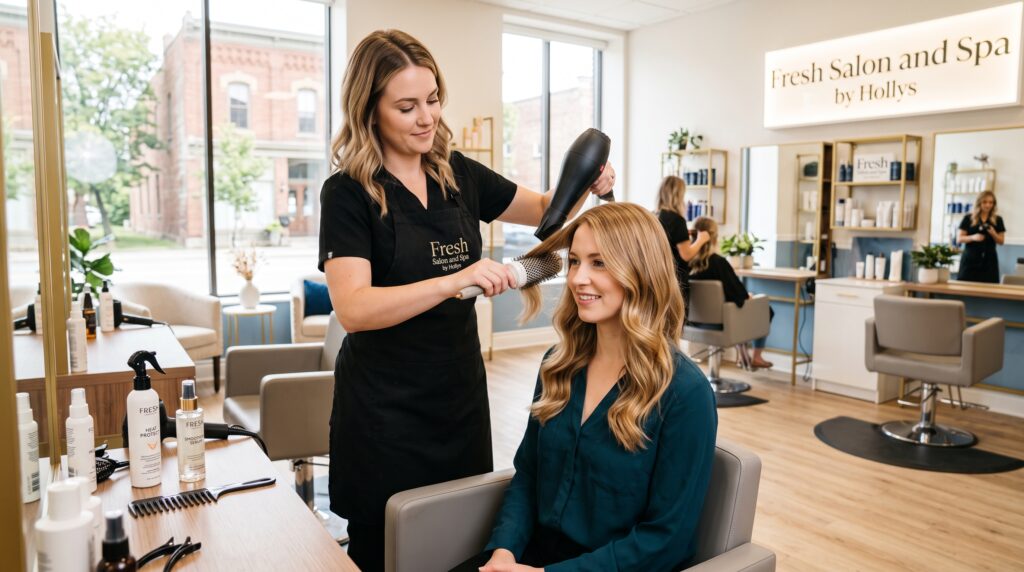
Summers in Guelph, ON, bring high temperatures and average relative humidity levels that often exceed 70 percent. This moisture in the air reacts with the protein structure of hair, causing the cuticle to swell and leading to frizz. This article explains the science behind humidity-related frizz and provides specific methods to manage it using available salon treatments and home care routines.
Frequently Asked Questions About Humidity and Hair
Why does my hair frizz only in the summer?
Hair contains hydrogen bonds that break and reform when exposed to water. In humid air, water vapor penetrates the hair shaft. This causes the cuticle—the outer layer of the hair—to lift and swell. The swelling creates a rough surface and makes the hair shaft bend irregularly. The result is the visible puffiness and stray strands commonly called frizz.
Can I permanently fix frizzy hair?
No permanent cure exists for frizz because hair responds to environmental conditions. However, treatments like keratin smoothing or Brazilian blowouts can alter the hair’s protein structure for up to three months. These treatments reduce porosity and create a smoother outer layer that resists moisture absorption.
Is frizz a sign of damaged hair?
Not always. Hair with a naturally curly or wavy texture has a more elliptical shape, which makes it more prone to frizz in humidity. However, hair that has been chemically processed, heat-styled frequently, or exposed to hard water can have a damaged cuticle that absorbs more moisture, increasing frizz severity.
Does hair type matter for frizz management?
Yes. Straight hair has a rounder shaft and lies flatter, so it resists humidity better. Curly and coily hair types have flatter, more irregular shafts with a higher surface area. This structure allows more water to enter the hair, making these textures naturally more susceptible to frizz. Products and treatments must be selected based on this texture difference.
The Science of Frizz in Southern Ontario’s Climate
Guelph, ON, sits in a humid continental climate zone. Summer months—June through August—typically see relative humidity readings between 60 and 80 percent during the day. The dew point, which measures the actual moisture content in the air, frequently reaches 18 to 22 degrees Celsius in July. When the dew point exceeds 16 degrees, hair begins to absorb noticeable amounts of atmospheric water.
Hair is hygroscopic, meaning it actively attracts and holds water molecules from the air. Each strand can absorb up to 30 percent of its own weight in moisture. When this water enters the cortex—the middle layer of the hair—it causes the protein bonds to shift. The cuticle scales, which normally lie flat like shingles on a roof, stand up. This raised cuticle reflects light unevenly, making hair look dull and feel rough.
How Hard Water Affects Frizz in Guelph
Guelph’s municipal water supply is sourced from groundwater wells and is classified as moderately hard to hard. Hard water contains high levels of calcium and magnesium ions. These minerals deposit on the hair shaft, creating a film that lifts the cuticle further. Hair washed in hard water is more porous and therefore absorbs more humidity from the air.
A clarifying shampoo used once every two weeks can remove these mineral deposits. However, over-clarifying can strip natural oils, making the hair drier and more prone to breakage. A balanced approach involves using a chelating shampoo—one that binds to minerals—every other week during the summer months.
Salon Treatments That Reduce Humidity Frizz
Professional treatments offer the most effective defense against summer humidity because they work inside the hair structure, not just on the surface. Several options are available at full-service salons in Guelph, ON, and each works differently.
Keratin Smoothing Treatments
Keratin treatments apply a liquid protein solution to the hair. The solution is sealed in with a flat iron heated to approximately 230 degrees Celsius. This process bonds the keratin to the hair’s cortex, filling in gaps in the protein structure. The result is a smoother cuticle that is less able to absorb atmospheric moisture.
These treatments typically last 10 to 12 weeks. They reduce styling time by up to 50 percent and eliminate most frizz in humidity. The treatment works best on hair that is not overly damaged. It is not recommended for hair that has been bleached more than once, as the chemical process can cause breakage.
Brazilian Blowouts
A Brazilian blowout uses a different formula that creates a protective layer around each strand. The liquid contains a blend of amino acids and polymers. When heat is applied, this mixture forms a flexible seal around the hair. This seal does not change the natural curl pattern but does prevent water from entering the shaft.
This treatment lasts about 12 weeks and leaves hair with more movement than a traditional keratin treatment. It is a good option for clients who want frizz control without losing volume or body. The process takes approximately 90 minutes and requires the client to avoid washing the hair for 72 hours afterward.
Hydrating Masks and Bond Builders
For clients who do not want chemical treatments, deep-conditioning masks with bond-building technology can reduce frizz by improving the hair’s internal structure. These products contain ingredients like ceramides and hydrolyzed proteins that temporarily patch the cuticle. The effect lasts for several weeks with regular use.
Bond builders work by reconnecting broken disulfide bonds within the hair cortex. Healthier internal structure means the hair is less likely to swell when exposed to humidity. These treatments are applied in-salon and take 20 to 30 minutes. They are suitable for all hair types and can be repeated every four to six weeks.
Daily Home Care for Humid Weather
Managing frizz during an Ontario summer requires a consistent home routine. The products used daily have a direct effect on how much moisture the hair absorbs from the air.
Shampooing Frequency and Technique
Shampooing strips the hair of its natural sebum, which acts as a protective barrier against humidity. During the summer, washing hair every day is counterproductive. Most hair types only need shampooing two to three times per week. When shampooing, focus the product on the scalp and let the suds rinse through the lengths. This prevents over-stripping the ends, which are the oldest and most porous parts of the hair.
Use lukewarm water rather than hot water. Hot water opens the cuticle and allows more moisture to enter. A final rinse with cool water helps flatten the cuticle and adds shine.
The Role of Leave-In Conditioners and Oils
Leave-in conditioners provide a continuous layer of hydration that prevents the hair from drawing water from the air. Look for products containing silicones like dimethicone or cyclopentasiloxane. These ingredients coat the hair and create a hydrophobic—water-repelling—barrier. Apply a nickel-sized amount to damp hair from the mid-lengths to the ends.
Oils such as argan oil, jojoba oil, or squalane can be used in small amounts. These oils penetrate the cuticle and also form a surface barrier. However, applying too much oil weighs hair down and makes it look greasy. Use no more than two to three drops for shoulder-length hair.
Drying Methods That Minimize Frizz
The method used to dry hair significantly affects frizz levels. Rubbing hair with a cotton towel creates friction that roughens the cuticle. Instead, use a microfiber towel or an old cotton t-shirt to gently squeeze excess water from the hair. Never wring or twist the hair.
Air drying is not always the best option in humid weather. As hair dries slowly, it has more time to absorb moisture from the air. Using a blow dryer with a nozzle attachment on medium heat can seal the cuticle faster. Point the airflow downward from root to tip to encourage the cuticle to lie flat. Finish with a 10-second blast of cool air to set the style.
Practical Advice and Next Steps for Guelph Residents
Managing frizz in the humid Ontario summer is a multi-step process that combines professional treatments, proper home care, and realistic expectations about hair behavior. No single product or treatment will completely eliminate frizz, but a combination of approaches can reduce it by 70 to 80 percent.
Residents of Guelph, ON, should consider scheduling a salon consultation before the peak humidity of July and August. A professional can assess the hair’s porosity, texture, and damage level to recommend the most appropriate treatment. The team at Fresh Salon and Spa By Holly offers keratin treatments, hydrating masks, and personalized product recommendations for clients dealing with summer frizz. Their location in Guelph, ON, has been serving the community since 1986, providing hair services that account for the specific challenges of the local climate and water supply.
When attending a consultation, bring information about your current hair care routine, including the products you use and how often you wash your hair. This information helps the stylist identify habits that may be contributing to frizz. For example, using a shampoo with sulfates—sodium lauryl sulfate or sodium laureth sulfate—can strip the hair and increase porosity. Switching to a sulfate-free cleanser is often the first recommendation.
Plan for a treatment timeline. A keratin smoothing treatment requires a 72-hour waiting period before washing the hair. During this time, the hair cannot be pinned, tucked behind the ears, or exposed to sweat. Schedule the treatment on a long weekend or before a period of low activity to ensure the best results.
Finally, accept that some frizz is natural. Hair is a protein fiber that responds to its environment. The goal of frizz management is not to achieve a glass-like finish on every day of the summer, but to maintain a manageable, healthy appearance. With the right combination of salon services and home care, hair can remain smooth and styled even when the humidity in Guelph, ON, reaches its highest levels.